★ 4.4
Black
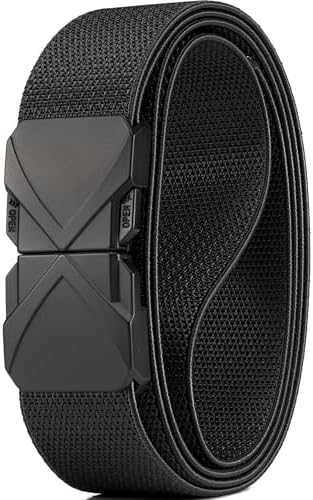
Stretch Belts
1 3/8" Stretch Nylon Belt - Black, waist 28"-34"
Elastic web belt, 1 3/8 inch, quick-release buckle.
waist 28"-34"
Guide · Care
Webbing survives almost anything except heat. Leather survives almost anything except being soaked and then dried fast.
Cold water, mild soap, hands. Work the dirt out of the weave with a soft brush if a walk went badly, rinse until the water runs clear, then hang it somewhere with moving air. That is it.
A washing machine will do the job too, in a mesh bag on a cold gentle cycle, but the metal hardware bangs around the drum and comes out scuffed. If you machine wash a belt, take the strap out of the buckle first where the design allows it.
Heat is what destroys these. Nylon webbing shrinks and stiffens, the thread in the stitching goes brittle, and the reflective thread woven through the leash faces loses its coating and stops being visible at night. It still looks silver in daylight, which is the annoying part: it fails without looking failed.
Same reason to keep it off radiators and off a hot car dashboard for days at a time.
Beach walks and gritted winter pavements are hard on the hardware, not the webbing. Salt sits in the clip spring and the ratchet track and corrodes them from inside. Rinse the metal in fresh water the same day, shake it out and let it dry open. A drop of light oil on a clip spring once a season is enough.
Do not put a leather lead in water. Wipe it with a barely damp cloth, let it dry away from heat, and every few months work a small amount of leather conditioner in with your fingers. Little and often beats a heavy dose once a year, which just leaves the surface greasy.
New leather is stiff and stays stiff for a few weeks of use. Handling it is what softens it. If a lead has gone hard after a soaking, conditioner brings most of it back, though the piece never quite returns to what it was.
Elastic web belt, 1 3/8 inch, quick-release buckle.
waist 28"-34"
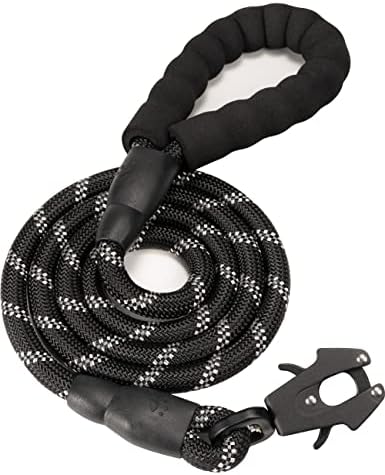
Rope leash with an aluminium frog clip and a padded handle.
5 ft, 1/2"
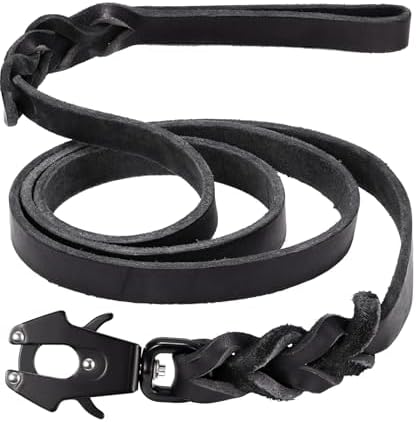
Full grain leather cut in one piece, braided at both ends.
4 ft, 1/2"